The 2026 Annual Report
Advancing Precision Health and Medicine Through Artificial Intelligence and Biomedical Data
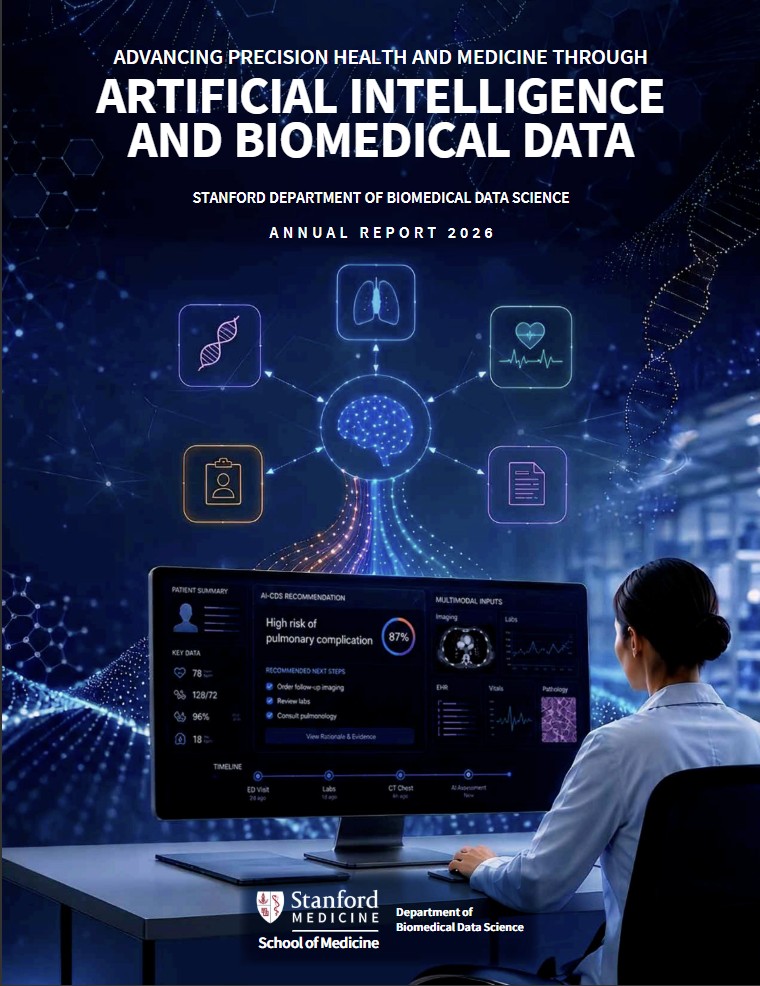
AI is changing how scientists discover biology, how clinicians make decisions, and how students prepare for the future of medicine. The Stanford Department of Biomedical Data Science’s 2026 Annual Report highlights breakthroughs in AI, genomics, computational biology, and medical imaging – and the people and partnerships turning data into better health.
Best viewed full-screen (bottom right).
Our Mission
The Department of Biomedical Data Science (DBDS) is an academic research community, comprised of faculty, students, and staff, whose mission is to advance precision health by leveraging large, complex, multi-scale real-world data through the development and implementation of novel analytical tools and methods.
What is Biomedical Data Science?
Biomedical Data Science “spans a range of biological and medical research challenges that are data intensive and focused on the creation of novel methodologies to advance biomedical science discovery.” The term “data science” describes expertise associated with taking (usually large) data sets and annotating, cleaning, organizing, storing, and analyzing them for the purposes of extracting knowledge. It merges the disciplines of statistics, computer science, and computational engineering” (Annual Review of Biomedical Data Science).
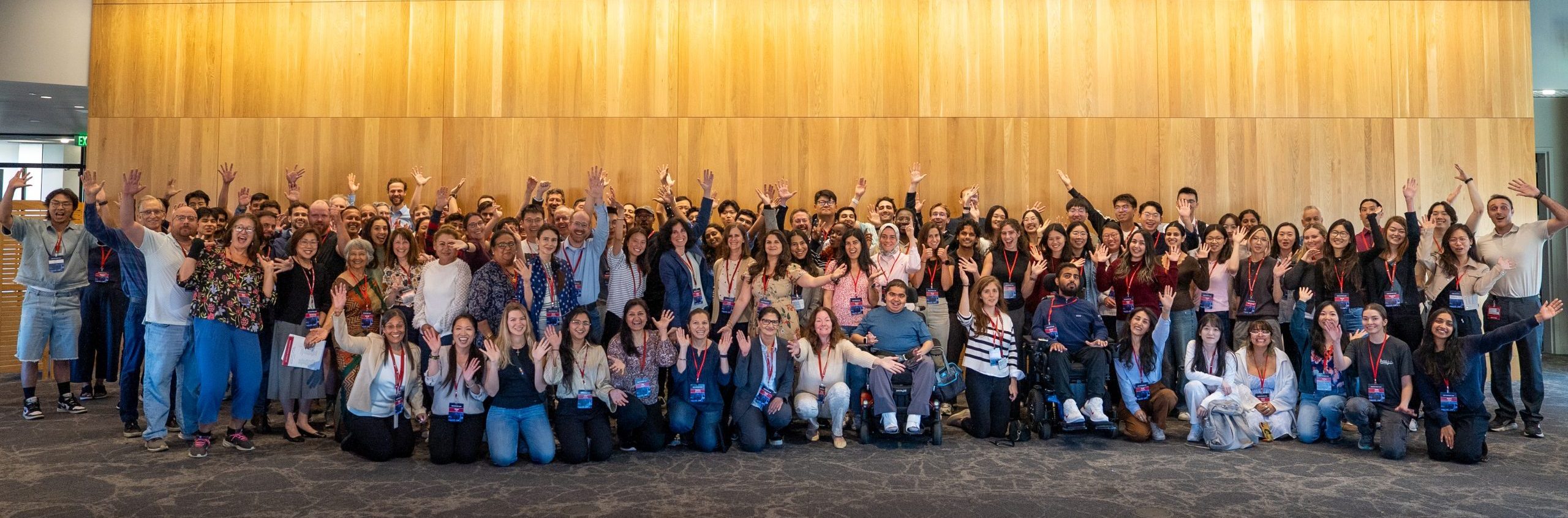
The Department of Biomedical Data Science (DBDS) at Stanford University held its annual retreat from September 15 to 17 at the Computing and Data (CODA) Science building and E.D.

Two Stanford Medicine teams have been awarded Advanced Research Projects Agency for Health contracts for their work in using artificial intelligence for better patient outcomes.

@StanfordDBDS
Kristy Carpenter wins the “Drug Repurposing” NIDA Challenge and may have solved an even bigger issue with her research
Biomedical Data Science Graduate Program
Our mission is to train future research leaders to design and implement novel quantitative and computational methods that solve challenging problems across the entire spectrum of biology and medicine.